abu-taher
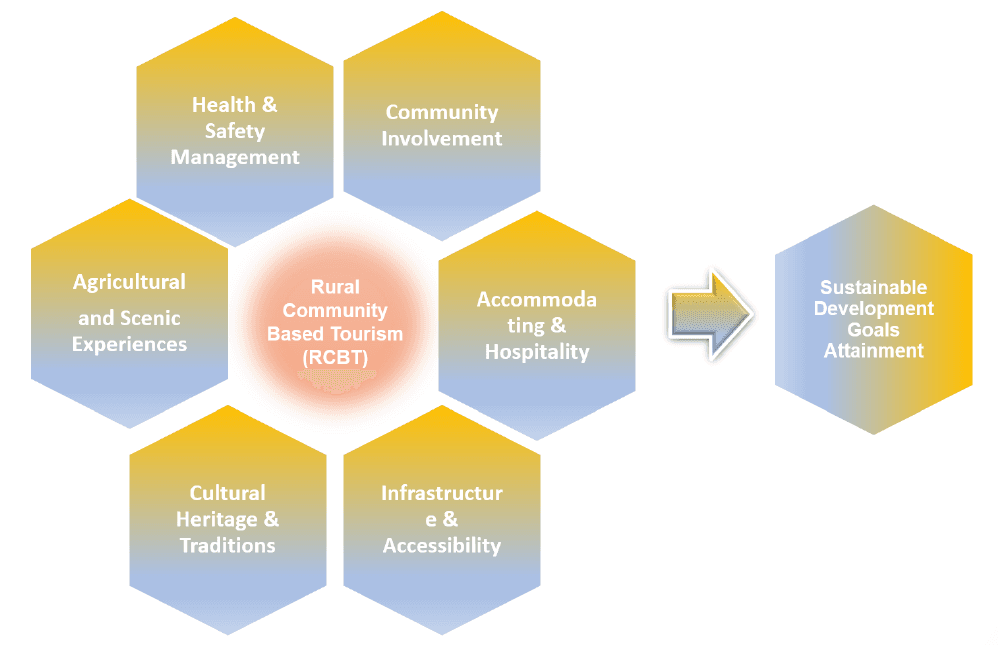
The aim of the research paper is to investigate the association between the Rural Community-Based Tourism (RCBT) exploration and sustainable Development Goals (SDGs) attainment. The rural community-based tourism has gained much attention in present conditions to meet the sustainable development goals in many countries. This descriptive research demonstrated the contribution of rural community-based tourism for developing and implementing strategies and policies to promote SDGs and also sought the forces, opportunities and challenges for achieving SDGs associated with rural community-based tourism in Bangladesh. There are many historical heritage sites with a diverse range of cultures, traditions, and natural resources in Bangladesh. The proposed model could be used in many studies that analyze different variables of rural community-based tourism that influence in promoting sustainable development goals. The results of the study demonstrated that many activities like poverty, hunger, good health & wellbeing, gender equality, clean water & sanitation, decent work, economic growth, sustainable cities & communities, responsible consumption & production, climate action, life below water, life on land can be integrated with rural community-based tourism to attain the SDGs in Bangladesh. The empirical model also identifies the components of rural community-based tourism that will be able to continue the progress in implementing the SDGs in the right way as well. The overall results will show the rural community-based tourism as a favorable tool that can contribute to promote sustainable development goals in Bangladesh.
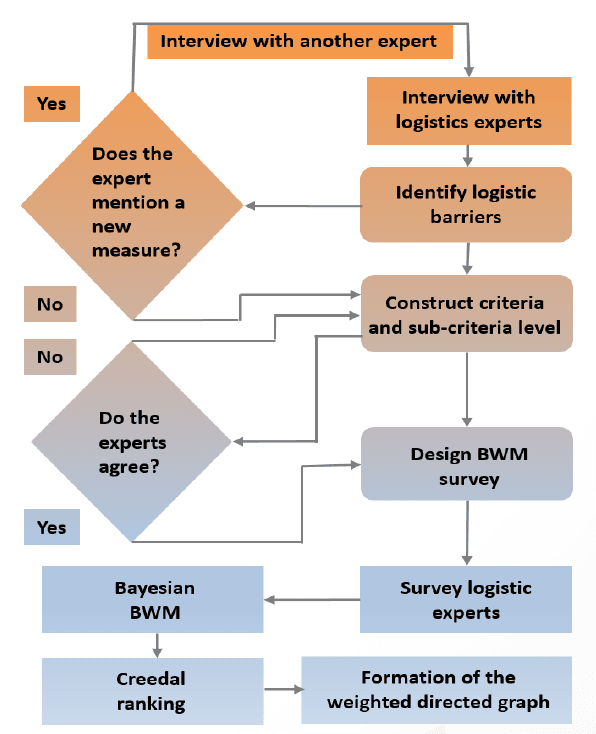
The concept of circular economy (CE) has emerged as a highly encouraging approach to achieve sustainable economic development for small and medium sized enterprises (SMEs). In recent years, the growing emphasis on circular economy, effective supply networks and strategic supply chain drivers has played a vital role in the development of sustainable SME systems. Modern manufacturing scenario (rapid, technology-driven transformation, Industry 5.0) and natural resources have shown huge challenges, particularly in the high cost of technology transformation, limitations of resources, skill manpower. The purpose of this study is to identify the barriers to sustainable manufacturing (SM) from SMEs in Bangladesh and rank them as per their priority. In this study, Bayesian Best-Worst Method (BWM) was applied to identify 12 major previously unexplored barriers, which were subsequently classified into four categories based on their shared characteristics. The results demonstrated several critical barriers within SME sector in Bangladesh, with the most significant being appropriate strategy plan (0.5374), inadequate transportations and infrastructure (0.3886), lack of skilled workforce (0.3146), lack of environmental concerns (0.2620), and the lack of government regulations (0.2539), respectively. Importantly, this study identified significant barriers that can be applied to improve the quality and sustainability of SMEs by reducing risks in the recommended areas.
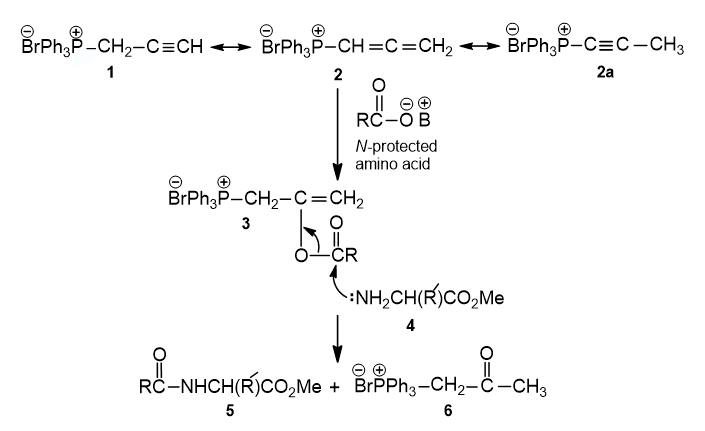
Efficient synthesis of amide and peptide bonds remains a central objective in organic and medicinal chemistry, particularly in natural product synthesis. There are many different types of conventional coupling reagents such as carbodiimides, uranium salts, and phosphonium-based activators which frequently generate stoichiometric waste, induce racemization, and require extensive purification. In this study, we report a rapid, metal-free, and operationally simple precursor (highly reactive allene intermediates) for the synthesis of substituted amides and dipeptides employing prop-2-ynyl-triphenylphosphonium bromide. In the presence of triethylamine, prop-2-ynyl-triphenylphosphonium bromide undergoes base-promoted isomerization to generate an allene species in situ, which reacts with N-protected amino acids to provide activated ester intermediates. Subsequent coupling with C-protected amino acid esters affords the corresponding amides and dipeptides through clean –CONH– bond formation, enabling efficient amino acid conjugation. The method was successfully applied to prepare a series of many different substituted dipeptides in a very effective way while isolated yields were up to 85% without chromatographic purification. The present synthesis protocol offers significant advantages such as operational simplicity, waste minimization, broad substrate scope, and so on, which lead a better efficiency to facilitate peptide coupling processes.